Practical cybersecurity for small businesses

Does your business have an email impersonation gap?

Could someone send an email that looks like it came from your business—and redirect a customer’s payment?

We check the public email settings mail providers use to spot messages pretending to come from your domain. We explain what we find and what to ask your IT provider. We don’t sign in to your email or check its internal settings.

Start My Free Exposure Review

Public information only. No passwords or internal access.

See What We Check
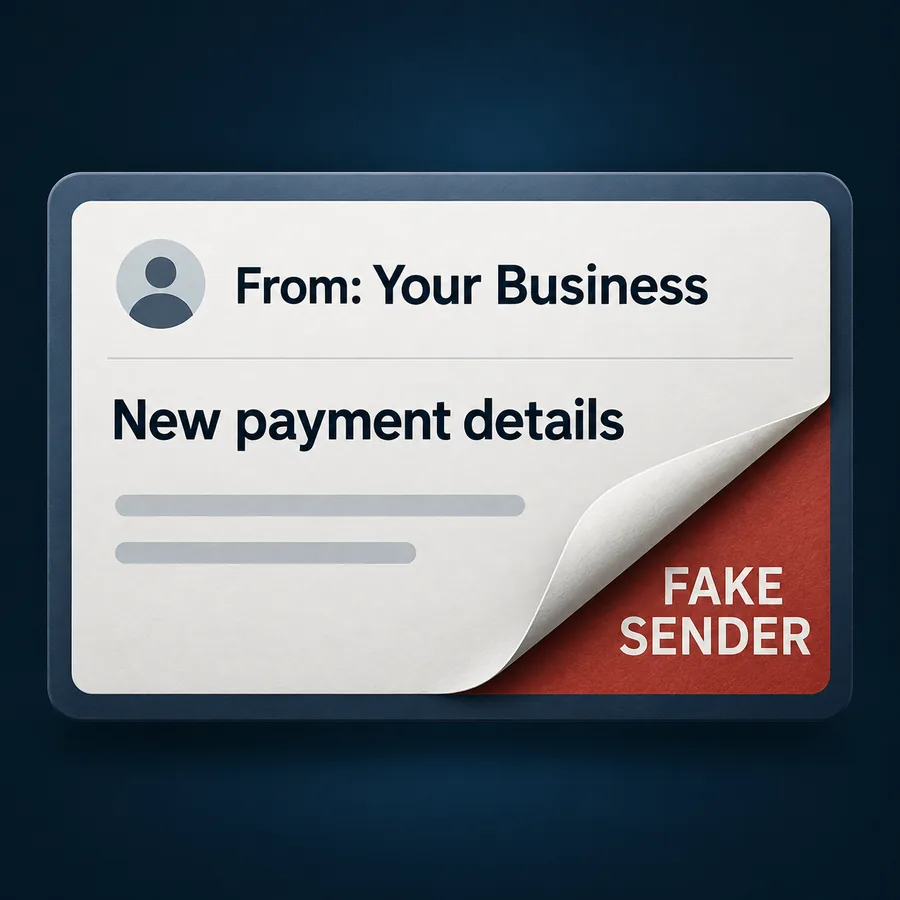
Illustration of a fake sender posing as the business in an email requesting new payment details.

Employee training

Give your team practice before the request is real.

Short weekly challenges help employees recognize suspicious login, payment, and information requests and respond with the right verification step.

Ready to test what your team has learned? Add managed phishing testing: authorized simulated emails with follow-up and reporting, from $395.

Free starting point

What can someone see without signing in?

The free Zero-Access Business Exposure Review™ checks public information about your email domain, website, and internet-facing services. It does not log in to Microsoft 365, check employee devices, or prove that a visible service is vulnerable.

Could someone fake your email domain?

We check public SPF, DKIM, and DMARC records—settings other mail systems use to help decide whether a message really came from your domain. We explain what your records ask those systems to do, and what they do not tell us.

What can people learn from your website and domain?

We look at public domain information, website details, and security certificates. This can turn up something worth asking your provider about, but it does not reveal how your private business accounts are configured.

What services appear reachable online?

We note services that respond from the internet and flag anything your IT provider should recognize. A service being visible does not, by itself, mean it is vulnerable.

See an example of what a finding might say

Paid verification

Business Security Baseline

For a closer look inside the business, the $1,995 Baseline reviews agreed safeguards such as Microsoft 365 access, device security, and backups. You get evidence and prioritized next steps—not just a scan to interpret.

$1,995

Fixed price for businesses with up to 25 employees; larger businesses receive a confirmed quote

What we verify

  • Email settings and safeguards related to messages pretending to come from your domain
  • Microsoft 365 accounts, administrator access, file sharing, and sign-in records
  • Evidence that devices are protected, software is kept current, and backups are available
  • Incident response plans and evidence for insurance or customer security questions

A clear path

Evidence first. Then address the right gaps.

Most smaller businesses already pay for Microsoft 365, antivirus, backups, or an IT provider. The question is whether the important safeguards are configured, enforced, and supported by evidence.

Check what outsiders can see

We look at public email settings, your domains and website, and services that appear reachable from the internet.

Check the safeguards inside your business

The Business Security Baseline reviews agreed evidence from Microsoft 365, devices, backups, and other essential controls.

Decide what to do next

Take the findings to your IT provider, or ask us to scope a specific improvement. You do not have to replace your provider or buy a bundle of fixes.

Built for real operating models

Already have an IT provider? Good.

Your provider can remain in place. We independently verify the controls leadership relies on, provide technical findings your provider can address, and can scope targeted improvements when a gap needs attention.

Led by security practitioners with automotive cybersecurity compliance, offensive research, and direct CISO/IT Director experience—working alongside your existing IT provider.

Built for your operation

Focused guidance for the way your business operates.

The same security fundamentals create different operational questions. Start with the industry page that best matches how your business works.

Trucking and logistics

Protect the email, dispatch, load-board, carrier, customer, and payment relationships that keep freight moving.

Explore trucking and logistics

Small manufacturers

Verify the safeguards around engineering files, supplier access, production systems, customer requirements, and recovery.

Explore small manufacturing

Agriculture and farm services

Protect the business email, supplier payments, orders, account access, and recovery processes agricultural retailers and farm-service businesses rely on.

Explore agriculture and farm services

Designed for business decisions

Technical evidence, translated for leadership.

Securing Your Business combines cybersecurity assessment experience with engineering and business-risk perspective. The goal is not to impress you with a large scan. It is to make the evidence clear enough for an owner to decide what happens next.

What you can expect

  • A plain-English conclusion before technical detail
  • Observed evidence separated from assumptions
  • A short list of the first recommended actions
  • Clear ownership for leadership, your IT provider, or us

Resources

Practical guidance for business owners.

Plain-English guides on the scams, exposures, and safeguards that matter to smaller businesses, organized by industry and dated so you can see what is current.

Trucking & Logistics

You Just Found Out a Load Was Double Brokered. Here's What to Do in the First 24 Hours.

Found out a load was double brokered? A plain-English checklist for freight brokers: locate the freight, hold payment, preserve evidence, and report it.

Published

Read the guide
Trucking & Logistics

Someone Else's Trucks Can Wreck Your FMCSA Record. Here's How to Catch It Early.

Unfamiliar inspections on your FMCSA record? Learn the warning signs of carrier identity theft, what to document, and how to request a DataQs review.

Published

Read the guide
Trucking & Logistics

When Someone Uses Your Carrier's Identity to Open a Freight Account

A $3.55 million Amazon fraud case shows why freight teams must verify carrier accounts and completed moves. Use these practical identity and payment checks.

Updated

Read the guide